
Home:     
guestbook
biography
repertory
press area
photo gallery
tour
news
newsletter
links
video
contact us

VITTORIO'S ARTS


What is truth?

Convictions are more dangerous enemies of truth than lies.
(Friedrich Nietzsche)

by Ivan Quaroni

When dealing with a topic such as lying, the first problem is attempting to define its opposite – truth. Having established the concept of truth, it is easier to define what does not conform to it. What is the truth, then? Most importantly, can a person asking such a question really come up with an objective, unequivocal answer?

If truth is the undeniable evidence of things, then it coincides with reality. What is real is true, it is that which exists now, in our perception and which cannot be denied. For example, rain is real, because in the presence of this atmospheric event the phrase “it’s raining today” is both valid and true. Yet faced with more complex events such as human actions, uncovering the truth becomes a complicated affair. Interpretation enters the stage, like a kind of deus ex machina. Faced with complex phenomena, man resorts to what philosophers call “hermeneutics”, a cognitive discipline that combines analysis and intuition, but which unfortunately cannot guarantee objective results. In the ironic words of Mark Twain, “get your facts first, and then you can distort them as much as you please”.

Interpreting means translating, in other words “betraying” the original truth. Reality, as we perceive it, is not necessarily “true”. Schopenhauer would say that to discover the truth, we need to tear the veil of Maya that covers reality like a thin layer of illusion. Jacques Lacan believed that the veil of Maya is the ego, in other words the individual’s conscious dimension, which is not the original element of an individual’s psychic life, but a cultural construct. The French psychoanalyst believed that truth lies in the unconscious, that ferment of ancestral emotions of desire and enjoyment. In essence, the Freudian principle of pleasure echoes what was revealed by Schopenhauer and still earlier by Buddhism, in other words that truth is desire, which is both suffering and the very substance of life itself.

After these brief considerations on the nature of truth, we can legitimately ask ourselves what a lie might be. It is tempting to say that everything that does not correspond to the genuineness of primary instincts is false - in practice, everything produced by civil society, such as culture, which are exclusive attributes of mankind. “An animal can be ferocious and cunning enough, but it takes a man to tell a lie”, wrote H. G. Wells.

Because art is a form of culture, we should deduce that it is fundamentally illusory. Pablo Picasso defined art as “the lie that reveals the truth”, an assertion echoed by Theodor Adorno when he said that “art is magic delivered from the lie of being truth”. In short, art, by definition, is deceptive, but so openly that it appears sincere. It is a paradox dealt with superbly by William Xerra in a series of works entitled Io mento (“I Lie”), a cycle which began in the late 1990s and was presented in 2002 at the Mudima Foundation together with a real manifesto and a video voiceover by Pierre Restany containing meditations on the mendacious nature of the artist. Phrases like “I lie about the space between significant and significance”, “I lie about the truth as I mislead”, or even “I lie about my contradictions” immediately define the parameters of the subject. The fact that the artist admits to lying could actually lead us to believe that he is telling the truth at least in this respect. This puts art in a privileged – but ambiguous – position of being suspended on the borders of reality and illusion. However, as Lacan observed “It is absolutely clear that the false ego, despite its paradox, is perfectly valid”. This is because, as we said, the conscious ego is, in the psychoanalyst’s view, the root of the lie. However, Xerra is not merely questioning the ego of the artist, but that of art itself, the domain in which it operates, its methods and purposes. The works in the series Io mento represent this conflict between truth and lie, an inherent part of the statute of art. They also generate another meaningful difference, which has accompanied the artist’s work since the start of his career – the difference between image and word. Drawing inspiration from the style of the billboard, hence seeing advertising as a codified strategy of lying, Xerra deals with the problem directly. By superimposing the written word (an abstract element) with a photographic image supposed to be realistic, the artist underlines the above mentioned dichotomy between illusion and reality. What is deceptive here is not only the link between the fragment of picture and the fragment of language, but the fragment in itself, which obstructs the global vision. In this way, the literal or allegorical meaning of each work is merely a piece of a jigsaw puzzle. At the same time, the study of every artist becomes a piece in the larger mosaic which is art, which in turn reflects the fragmentation of reality. As Loredana Parmesani accurately observed, “artistic study itself is thrown into question, since every fact is uncertain and unreliable and faced with this, space is filled with realities which we could define as authentically fake”. The merit of Xerra lies in having clarified that the duty of art is to act through a critical, sceptical awareness by making doubt an act of faith, as Restany wrote at the foot of the 2002 manifesto.

Through works that combine painting, photography and embroidery, Florencia Martinez’s views on lying are linked to an investigation of the nature of human relations, an exploration of the fragility and paradoxes that criss-cross our existence. It is a less rigid, more participatory approach in which we can glimpse a sequence of powerful emotions, oscillating between fury and irony, joy and melancholy. Her modus operandi tends more towards story-telling than analysis, in which representation is the result of an empathetic consideration of the subject. When Florencia Martinez deals with the topic of childhood lies, as in I vincitori (“The winners”) and Io sono Dio (“I am God”) she does so with a mixture of controlled yet amused involvement. In the first case, the children victorious over a fearsome school of sharks, the artist depicts a kind of innocent lie, related to the evolutionary processes of childhood. We know that in children, the discovery of the distinction between truth and lying is a gradual process. Sándor Ferenczi saw the infantile lie as a mechanism that helps to preserve a child’s illusion of omnipotence. According to Melanie Klein, a real lie emerges with the decline of parental power. In Io sono Dio the lie is less innocuous, as infantile omnipotence, if not resolved as the child grows up, can take on serious, pathological dimensions. The work of Florencia Martinez thus portrays the dangers of childish omnipotence running over into adulthood. This theme also has links with more recent works, in the series L’amore mio buonissimo, which investigates human idiosyncrasies and neuroses. The artist looks at internet chat adverts, particularly those of the lonely hearts variety, to demonstrate how people project a false, illusory image of themselves, as in the case of Le mie caratteristiche (“My characteristics”) a work in which the bizarre figure of a man on horseback is accompanied by words such as “gentleness”, “sensitivity”, “courage”, “tenacity”, “initiative”, “enthusiasm”, “generosity” and “foresight” – a palette of virtues rarely found in a single individual. Meanwhile Cerco una donna (“Seeking a woman”) highlights the disturbing aspect of certain adverts in which manias, obsessions and other personality disorders lurk like sinister shadows. Here, as in the work Posso dire di essere una persona normale (“I can claim to be a normal person”) it is the female image, again nude and fragile, which is the key, as it opposes the misleading content of the adverts.

The multi-faceted artist Andy, musician, DJ and painter, takes a completely different approach to lying. He sees make-up and disguise as an essential part of his research. As Oscar Wilde wrote, “all men lie, but give a man a mask and he’ll tell you the truth”. Yet the deliberately artificial imprint of Andy’s paintings is a sign that the artist has not only accepted the illusory nature of the world, but has metabolised it and even transformed it into a language, an artistic style. Cartoons, rock stars, and the video games and toys of the 1980s become synonymous with the individual turning in on himself and his memories of childhood and adolescence. Admittedly, this turning-in might be ironic, but in some way it reflects the infantilised imagination of the generation of 30 and 40somethings who the American writer Lee Nichols has defined “adultescent”. It is no coincidence that television is the subject of the only work by Andy in the exhibition. More precisely, it is a monoscope, a television picture used to calibrate the light, contrast, brightness and fidelity of a television set. The English call it a test pattern, because of its geometric pattern of colourful horizontal and vertical stripes, but when televisions first appeared in private homes, it symbolised the end of a broadcast. Andy’s work is a synecdoche, in which the monoscope indicates the television, the ultimate instrument of distortion, whose sinister influence inspired George Orwell’s dystopian masterpiece, 1984.

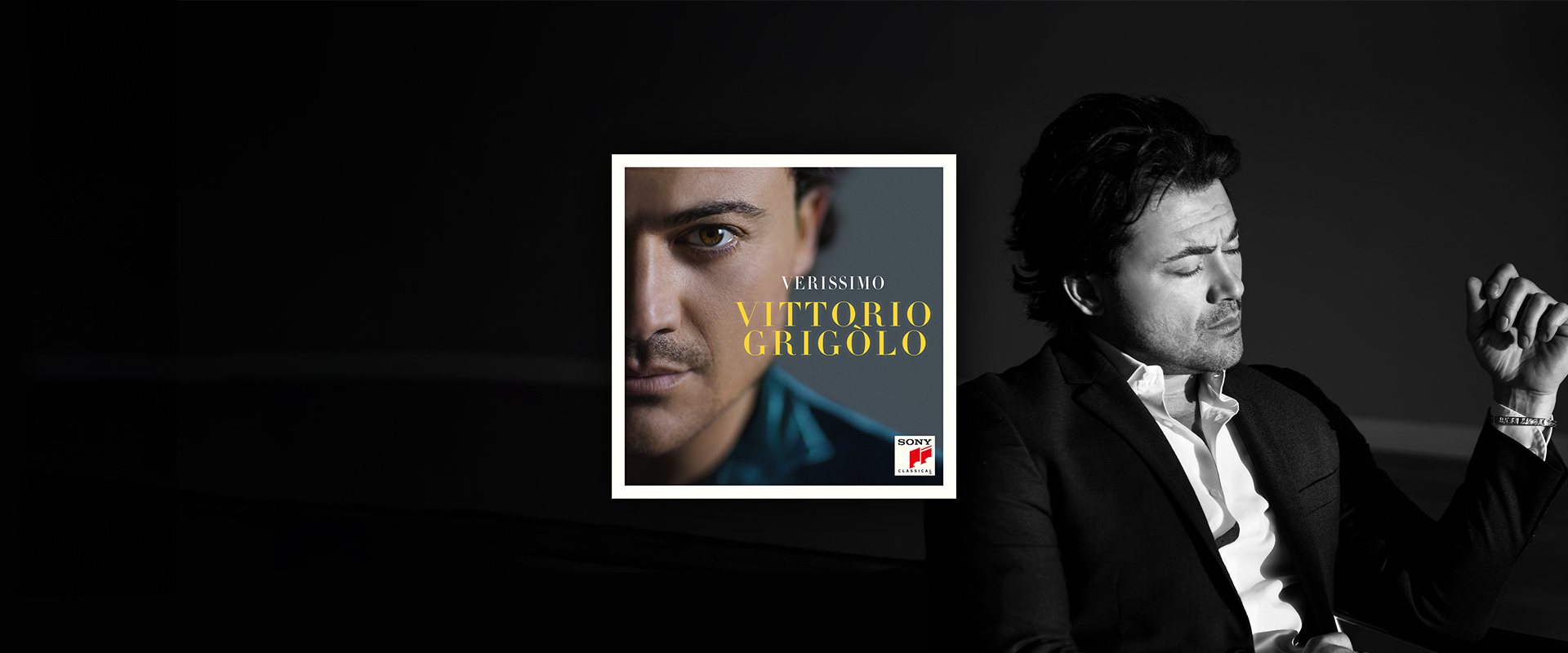
Finally, another network (unrelated to television) is the theme of the tableau by the famous tenor Vittorio Grigolo, who has tried his hand at art for the occasion. The work, a chaotic interweaving of grids and metallic wires imprisoning two hands, is a kind of autobiographical confession, an story of the disappointments and deceit suffered during the early years of his career. Produced after the success of his first album, Oltre la rete (the name of the painting) expresses a genuine rage, giving a retrospective account of an experience he has lived, which is therefore true. Of all the works in the exhibition, it certainly comes closest to expressing a truth which is first and foremost existential, as it does not appear to be the result of a formal linguistic study but the immediate impression of an emotion. “From an artistic viewpoint” affirms Grigolo, “I am nobody, except myself in a limited space in which I impress my states of mind”. It is precisely this absence of guile, this lack of sophistication which makes his testimony sincere. However, it is well-known that Oscar Wilde’s maxim “a little sincerity is a dangerous thing, and a great deal of it is absolutely fatal” certainly applies to the art world.